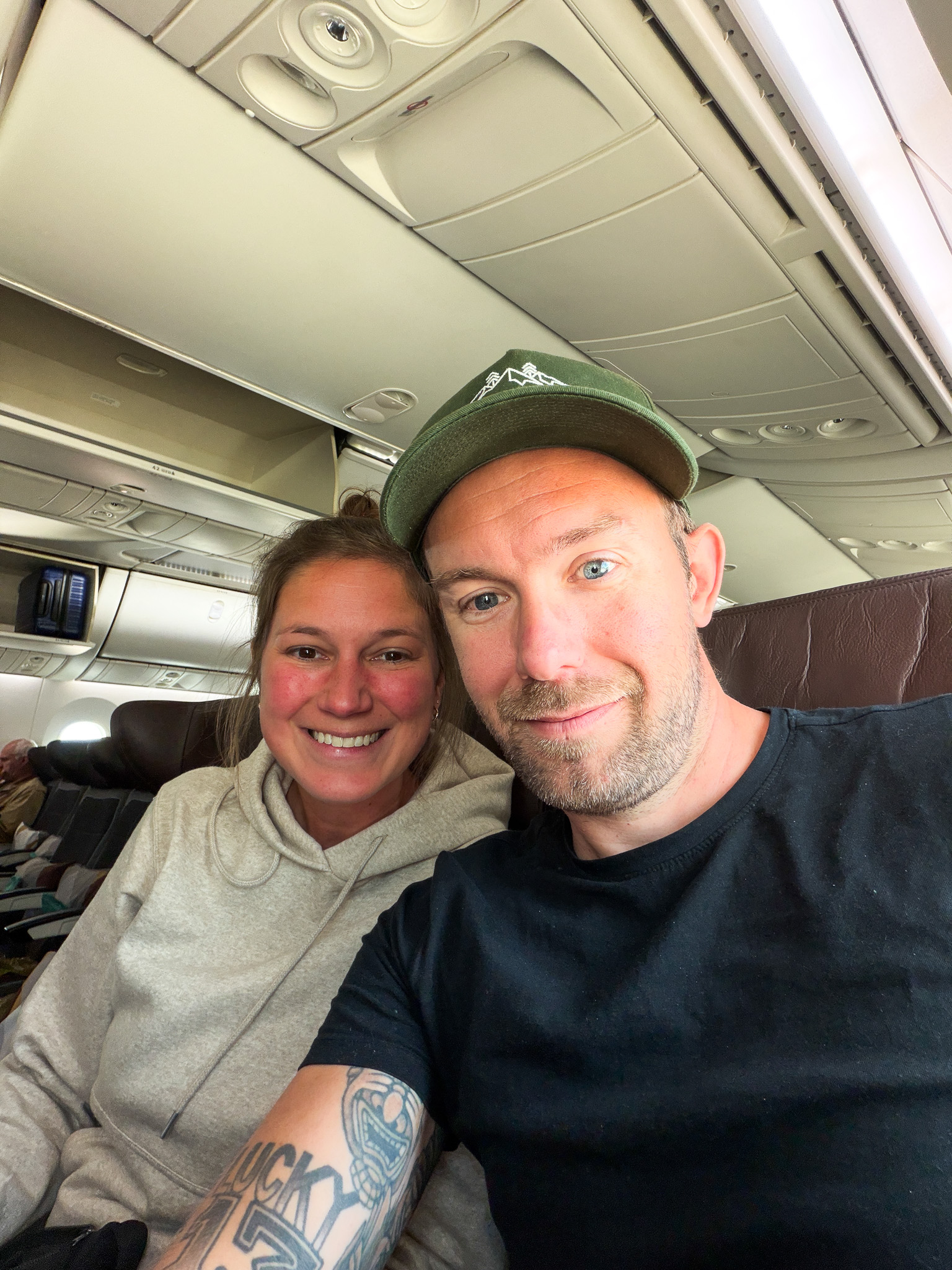
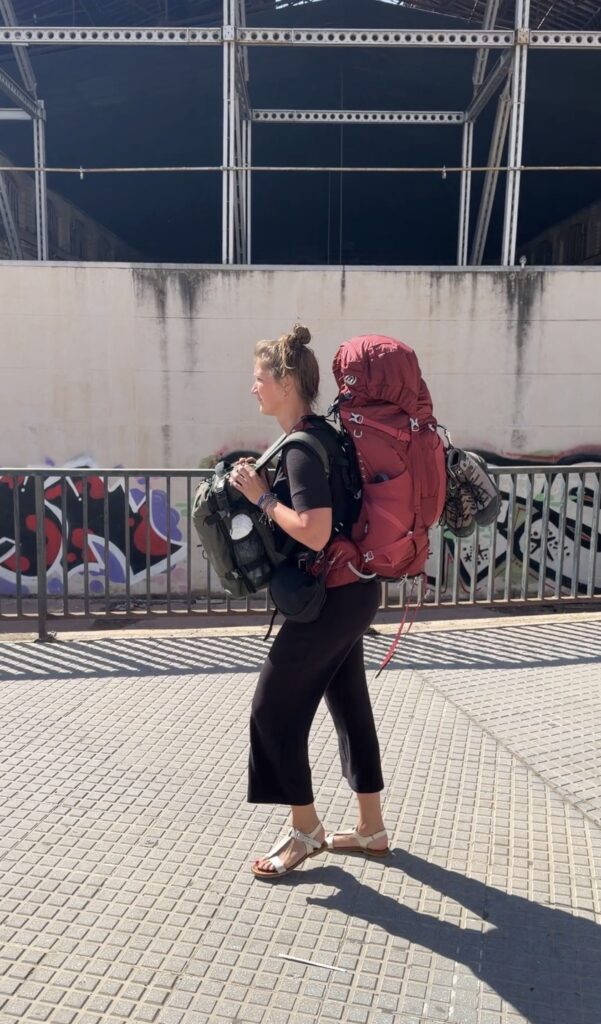
Before leaving for Indonesia, I spent months thinking about diabetes. Not in a dramatic way, but in the practical way that anyone with type 1 diabetes understands. The endless mental checklist that quietly follows every big decision. Do I have enough insulin? What happens if a sensor fails? How will I keep everything cool? What if airport security takes issue with the amount of medical supplies I’m carrying?
Because unlike most travelers, I wasn’t just packing clothes and camera gear. I was packing months of medication, sensors, needles, backup supplies, cooling systems, and all the small things that quietly keep my body functioning.
Airport Security with Type 1 Diabetes
One of the things I had researched extensively before traveling was airport security and diabetes sensors. According to information from FreeStyle Libre and several diabetes travel resources, there is still uncertainty about how certain airport scanners may affect continuous glucose monitoring sensors. Because of that uncertainty, I decided I didn’t want my entire stock of sensors going through the baggage scanner if I could avoid it.
If you’ve read my blog about preparing for full-time travel with type 1 diabetes, you’ll know exactly how much I invested in building that supply. Losing even part of it because of avoidable damage felt like an unnecessary risk.

At Madrid Airport, I explained the situation to security staff and asked if my sensor supply could be checked manually. They agreed, but only after I removed every sensor box from my bag and placed them separately in a tray. The tray was moved around the scanner and inspected by hand instead.
In Abu Dhabi and Bali, the process was even simpler. Security officers lifted the entire bag aside and checked the contents manually without sending it through the scanner at all.
Both in Madrid and Bali, staff asked whether they could open the individual sensor boxes. I politely declined. Once the packaging is opened, there is always a possibility that the protective seal is compromised, and the last thing I wanted was to discover months later that a sensor could no longer be used. Fortunately, nobody insisted.
One employee asked why I was carrying so many sensors, which led to a brief conversation about our travel plans and the fact that we currently have no return date. What surprised me most was that despite carrying a large amount of diabetes supplies, nobody asked to see my medical letter from my doctor. I had that documentation ready during every stage of the journey and even offered to show it a few times, but nobody seemed interested.
That does not mean you should travel without it. If there is one thing travel teaches you, it is that every airport, every country and every employee can be different. The fact that nobody asked this time says very little about what might happen next time.
Flying 32 Hours with Insulin
If airport security was the challenge I expected, keeping insulin cool was the challenge I spent the most time thinking about. I carry my insulin in three insulated cooling bottles with cooling elements inside. Those bottles are stored in a separate insulated medical bag that travels with me as an additional piece of hand luggage.

Before leaving, I had read that passengers are generally allowed to carry an additional medical bag when transporting necessary medication. Even so, I expected questions during check-in, security or boarding. They never came.
Nobody questioned the extra bag. Nobody inspected the cooling bottles. Nobody asked why I was carrying containers filled with cooling elements and insulin pens. The entire process felt surprisingly normal.
What was less reassuring was the simple reality that the cooling elements are designed to stay cold for roughly twelve hours, while our journey lasted thirty-two. To be completely honest, I also didn’t invest in the most expensive or high-end insulin cooling systems available. There are travel cooling solutions on the market that promise longer cooling times and come with a much higher price tag, but for this trip I chose a more practical and affordable option that seemed reliable enough for what I needed.
The insulin was packed properly, protected from direct heat and insulated for the entire journey. I also reminded myself that pharmaceutical companies design their recommendations around ideal conditions. Real life is rarely ideal.
At some point, traveling with diabetes requires accepting that not every variable can be controlled. You prepare as well as possible, and then you continue moving.
Time Zones, Airplanes and Blood Sugar Levels
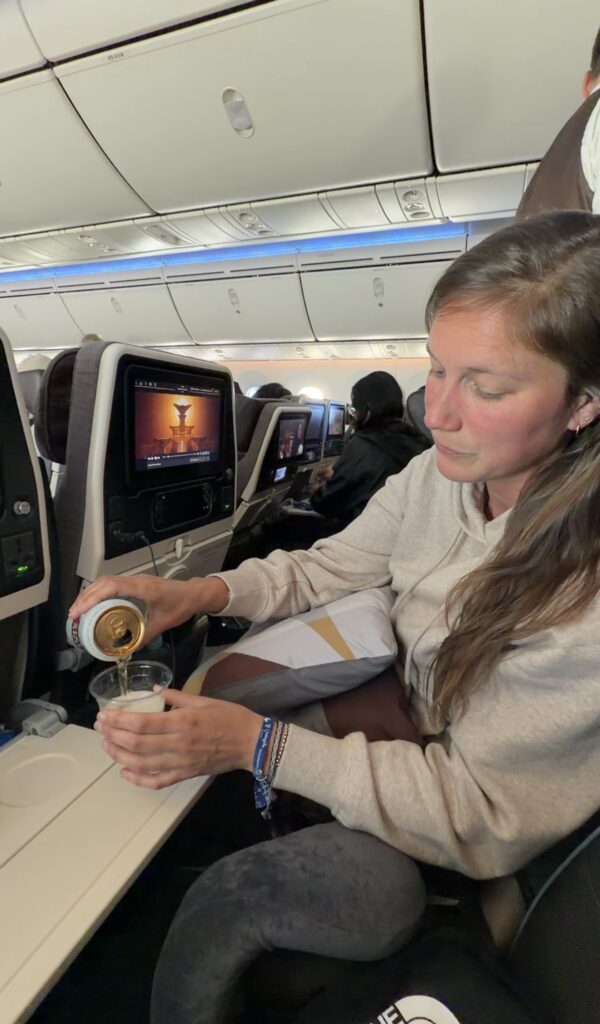
The one thing that did happen exactly as expected was that my blood sugar became more difficult to predict.
During the flight from Madrid to Abu Dhabi, my glucose levels climbed higher than normal and didn’t respond immediately when I corrected with insulin. For me, that is usually a sign that something else is influencing my body. Stress, hormones, altitude, sleep disruption or simply the fact that I was sitting inside a pressurized metal tube thousands of meters above the ground. Sometimes diabetes doesn’t provide a clear explanation.
Eventually, after taking slightly more insulin than I normally would, my blood sugar slowly started coming down again and remained fairly stable for the remainder of the trip.
What changed most was not my blood sugar itself, but my attention. Normally, I might check my glucose six times a day. During the flight, I checked it almost every thirty minutes. Not because I was worried, but because I wanted to understand the direction. Was it rising? Stabilizing? Falling? The number itself matters less when you can see the trend.
As always, I chose not to restrict myself too much with food. Every meal served on the plane was eaten. Every snack was accepted. Let’s be honest, if I’m stuck in an airplane for thirty-two hours, turning down the tiny dessert feels like a punishment that goes far beyond diabetes.
Some people with diabetes prefer to avoid certain foods while traveling, and I completely understand that approach. Personally, I would rather adjust my insulin than spend an entire journey negotiating with a bread roll and a piece of chocolate mousse.
Drinks are a different story. I generally avoid sugary drinks whenever possible, but food has never been the place where I want diabetes to have the final word. Life is already asking me to sit in a cramped airplane seat for over a day. The least I can do is enjoy the meal.
The Confidence I Didn’t Expect to Find
Before this journey, I thought the hardest part of traveling with type 1 diabetes would happen before I even arrived.
I imagined airport security, damaged sensors, warm insulin, complicated conversations and unexpected problems at every step of the journey. Instead, most of those fears never became reality.
The flight taught me something I am slowly learning again and again while traveling. Preparation matters, but eventually there comes a point where you have to trust yourself more than your plans.
No responses yet