
In the past weeks, the emotional side of this journey has slowly been joined by something much more practical. Numbers. Dates. Quantities. Conversations at the local health center.
In my previous blog, I wrote about the mental shift that started happening. About standing at the edge of a new beginning. About the mix of courage and fear that comes with preparing for full-time travel with type 1 diabetes. That was the emotional layer.
This is the practical one.
Because while dreaming about volcanoes and tropical coastlines is exciting, type 1 diabetes keeps asking a very grounded question:
Do I have enough?
Trying to Plan Six Months Ahead in a System That Thinks in Weeks
In Spain, medication is usually prescribed for a fixed period. You receive insulin for a certain timeframe, and you are only allowed to collect more once that period has passed. The same applies to sensors. There is no automatic “travel buffer.” No standard policy for someone leaving the country for months or years. That means I cannot simply walk in and ask for half a year of supplies.
So the next step in this journey has been dialogue.

Together with my Spanish general practitioner and the nurses at the health center, I am now exploring whether it is possible to arrange an extended prescription. My goal is clear: I would like to leave Spain with at least six months of insulin and sensors in my backpack.
With insulin, I expect this will be easier. Doctors understand that insulin is life-saving and that switching brands abroad is not always simple. There is more room for discussion. With sensors, however, it may be a different story.
Preparing for a “No” Before It Happens
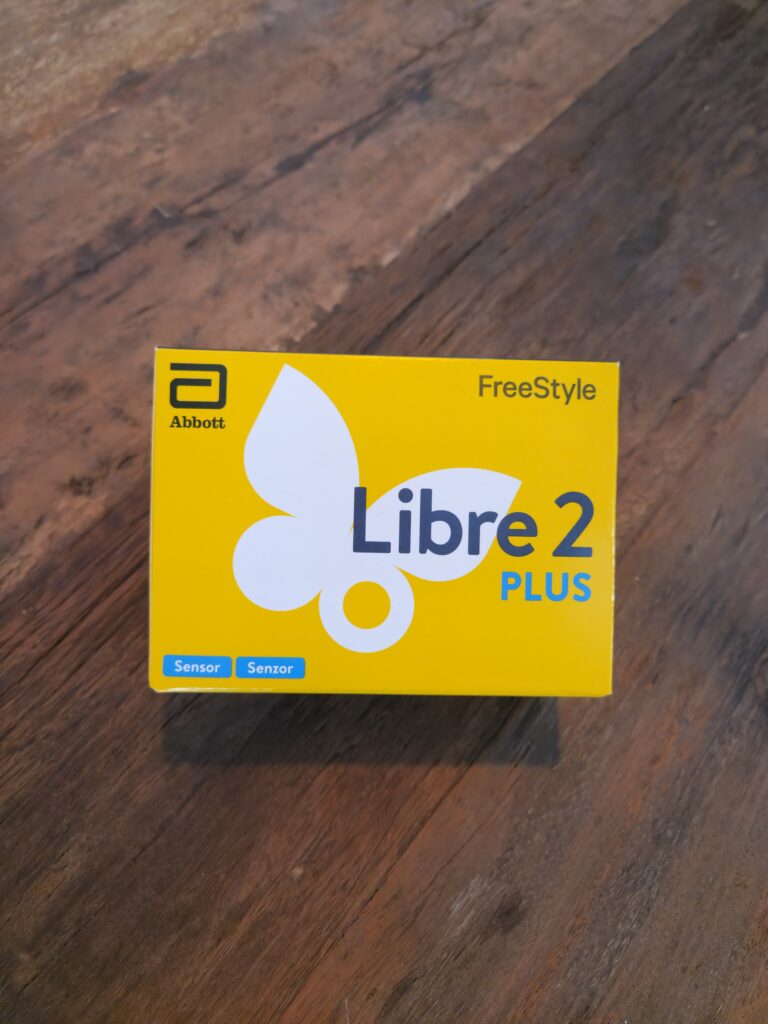
Continuous glucose monitoring sensors are often strictly distributed according to a monthly system. You receive a set number per period, and that is it. Advancing large quantities is not standard practice. So I am preparing myself for the possibility that the answer will be no.
If the Spanish system cannot provide an extended supply, I will need to purchase additional sensors privately to build my own six-month buffer. That means researching prices, comparing providers, and including that cost in our travel budget. It is not ideal, but freedom sometimes means paying for flexibility yourself.
The Financial Reality of Independence
There is the romantic version of this story. Two people choosing freedom. Selling almost everything. Traveling the world. And then there is the financial reality underneath it.
Because my insurance excludes type 1 diabetes, every sensor, every penfill, every needle comes out of our own pocket. No reimbursement. No backup. Just us.
We have done the math. We easily reserve around €250 per month purely for diabetes supplies. That is roughly €3,000 per year just to keep my body functioning the way others’ bodies do naturally. And that does not include emergencies or price differences abroad.
Seeing that number is confronting. But instead of viewing it as a burden, we see it as an investment in freedom. It is the price of autonomy. The price of not postponing our dreams. Traveling full time already requires intention. Traveling with type 1 diabetes requires an extra layer of responsibility. So our spreadsheets include a dedicated diabetes buffer. We prepare for private purchases. We plan for the unexpected.
Financial independence, for us, does not mean fewer responsibilities. It means consciously choosing which ones we carry.
Conversations That Matter
I did not expect that some of the most important moments in this preparation would happen in small consultation rooms. Across a desk. With a doctor looking at a screen. With me trying to explain a life that does not fit inside the usual boxes. These conversations are not just about prescriptions. They are about trust.
I share our plans. The long-term travel. The uncertainty. The fact that we will not simply be able to return every few months to refill a prescription. I try to translate a nomadic dream into something that makes sense within a structured healthcare system.
And I notice something shifting in me.
Where I used to feel small or apologetic about my diabetes, I now speak with more steadiness. Not demanding. Not dramatic. Just honest. This is my reality. This is what I need. What is possible?
In my earlier blog, I wrote about my relationship with diabetes. About how I have struggled for years to truly stand for myself in it. How I sometimes avoided looking too closely. How taking full responsibility for my health did not always come naturally. It was easier to minimize it, to push it aside, to hope it would quietly adapt to my life.
But preparing for this journey is confronting me in a different way.
I cannot ignore it now. I cannot be half-committed. Full-time travel requires full responsibility. And instead of resisting that, I feel something new emerging.
Sometimes I meet flexibility. Curiosity. A professional who is willing to think along with me. Other times I feel the boundaries of protocol very clearly. Both responses teach me something. They teach me that advocating for myself is not confrontation. It is responsibility. It is care. It is maturity.
And maybe that is one of the biggest lessons of this whole journey.
Accepting Multiple Scenarios
Right now, I do not know exactly how this will unfold.
There are a few possible paths. Maybe I will walk out of the health center with extended prescriptions for both insulin and sensors, feeling fully equipped and supported. Maybe insulin will be easier, and I will quietly accept that I need to purchase extra sensors myself to build my own safety net. Both paths are manageable.
And somehow, that realization brings peace.
For a long time, uncertainty felt like danger. If I did not know exactly how something would work out, my mind would spiral. But now I am noticing something different. The more I prepare, the calmer I become. Not because I have eliminated every risk, but because I am facing them instead of avoiding them. At the same time, something softer is growing alongside the planning.
Trust.
Trust that people with type 1 diabetes live full lives all over the world. Trust that pharmacies exist in places I have never been. Trust that systems function beyond the one I know in Spain. Trust that when the moment comes, I will ask questions, stand in line, figure it out.
I am beginning to understand that preparation and surrender are not opposites. They can sit next to each other. I do not need to control every detail before we leave. I can plan carefully and still leave space for the unknown.
And maybe that is the real preparation happening here. Not just building a stock of supplies, but building the capacity to move forward even when everything is not perfectly certain.
Moving Forward
What this chapter is teaching me is simple but profound.
Security is not only about the number of insulin pens in my bag or the amount of sensors I can store. It is about knowing that I can respond when circumstances change. That I can navigate unfamiliar systems. That I can take responsibility for my health, wherever we are in the world.
I cannot control every variable. I cannot map out every pharmacy or predict every regulation. But I can prepare thoughtfully and trust in my ability to adapt when preparation reaches its limits.
The goal is no longer perfect certainty. The goal is resilience.
And with that resilience, the world feels less intimidating and more accessible. Not because it guarantees ease, but because I know I will meet it prepared and capable.
That is the real safety net I am building.
Two Wild Nomads. Stories about freedom, growth and choosing the life that feels right.
No responses yet